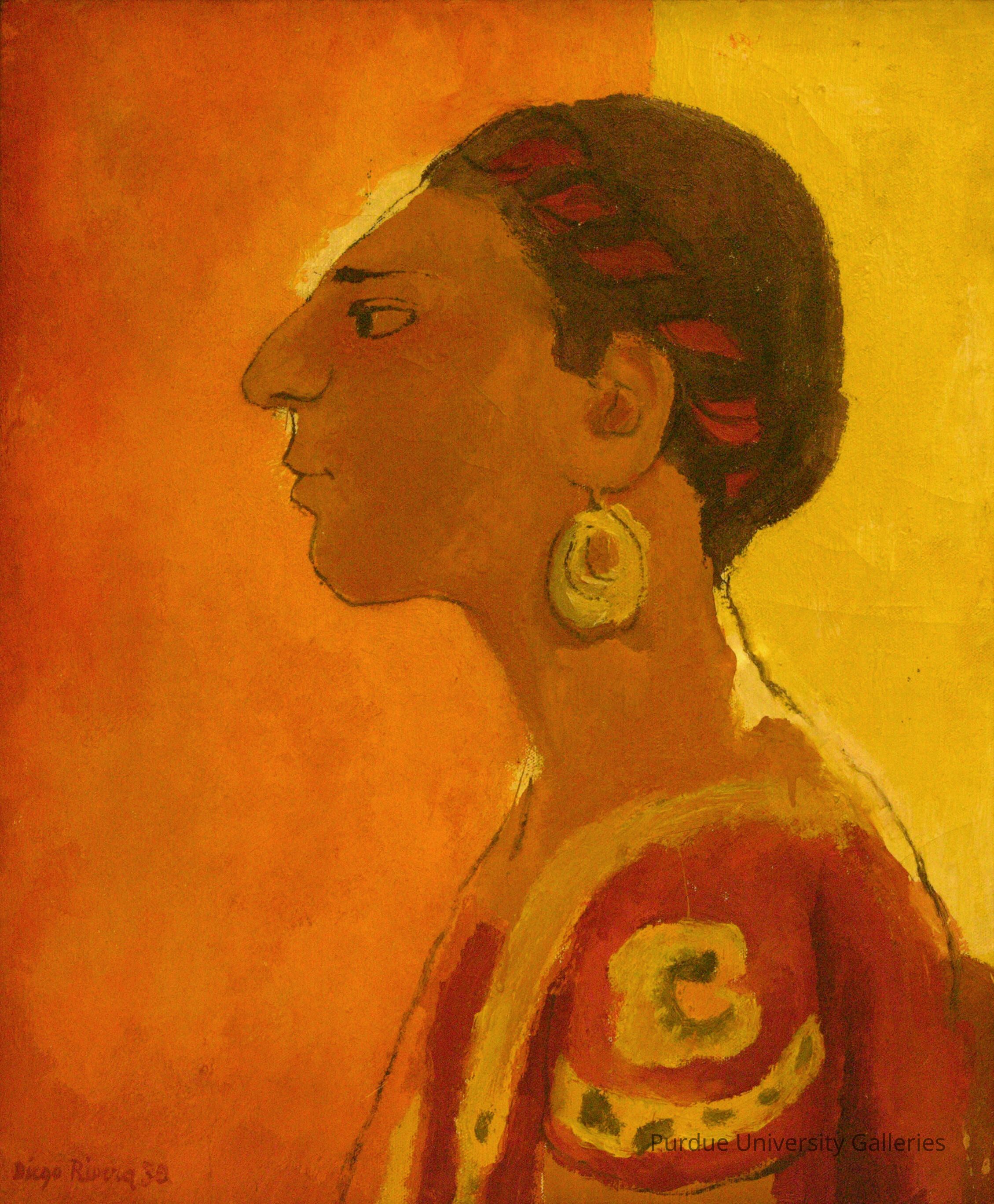
Cabeza de Tehuana: Tehuantepec
1995.12.01
Easel
OilOil on Canvas
Permanent
1995.12
Edward Stowe Akeley
Courtesy of Edward Stowe Akeley
Edward Stowe Akeley
Diego Rivera
1930
Signature
lower left of image
Diego Rivera 30
Painted
Sticker
Back of frame, left
Museum of Modern Art LOAN
English
Ink
In capital letters
Sticker
Back side of frame, left side
COLUMBUS GALLERY OF FINE ARTS [?]5-58
English
PrintedPencil
First part is printed, numbers are written on in pencil
Previous Number
Back side of frame, upper left corner
1995.12.01
Pen
Label
Back of frame, upper middle
Property of Edward Akeley [?] Artist: Castellanos Rivera Tehuamtepes Woman
Pencil
Castellanos is crossed out with a line through the center of the word Some of the writing is hidden behind a screwed in bar on the back of the frame
Label
Back of frame, upper center
AKELEY Rivera - "HEAD OF WOMAN * TEHUANTEPEC" $750.00
PrintedPencil
AKELEY is written in pencil, the rest is typed on a typewriter
Label
Back of frame, upper right
INSTITUTO NACIONAL DE BELLAS ARTES [?] Título..."CABEZA DE TEHUANA"., O- leo sobre tela. Pintado (en fecha).............. Medidas.........0.56 x 0.46 mts. Colección...COL. E. WEYHE GALLERY, de Nueva York, N.Y.
Spanish
National Institution of Fine Arts Title: HEAD OF TEHUANA O- read on fabric Painted (on date) Measurements Collection
Printed
The categories are printed directly on the sticker, the answers and details are printed with a typewriter in the lines provided (indicated by ...) Some of the information is covered by a bar screwed onto the back of the frame
Receiver MarkingSticker
Back of frame, upper right corner
Purdue University Galleries 1396 Physics Building [?]m. 204 West Lafayette, IN 46707-1396 (317) 494-3061 1995.12.01 Rivera, Diego Cabeza de Tehuana: [?]tepec
Printed
Some of the information is covered by a bar screwed onto the back of the frame
Inscription
Back of frame, lower right corner
57 15-P
Ink
57 is enclosed in a circle
Portrait
Picture
Painting
Art
Category 08: Communication Objects
Used by Professor and Mrs. Edward Akeley
Dimensions are without the frame
22-1/4 in
18-1/4 in
Dimensions with frame
28-1/4 in
24-1/4 in
2-3/4 in
OrangeYellowBrownBlackGreenGrayPurpleMagenta
Source Notes
Information provided by source.
(E. Weyhe Books and Prints, New York) {1}; purchased before 1958 by Professor and Mrs. (Anna) Edward Stowe Akeley, West Lafayette, Indiana; donated to Purdue University Galleries in 1995 {1} Ascertained from a stamp on the reverse of the work. Erhard Weyhe (1883-1972) was a dealer and collector who operated a gallery and bookstore on Lexington Avenue starting in 1919. He was known for introducing avant-garde artists such as Alexander Calder and Diego Rivera to American audiences.
Artist's Rights Society
INTRO: Community Selections (2013)
25: A Selection Works from Purdue Galleries’ Permanent Collection (2024)
Modernists of Mexico, The (1996)
Cultural/Historical Context
Cabeza de Tehuana: Tehuantepec Diego Rivera (1886-1957) oil on canvas, 1930 Diego Rivera had a broad range of artistic styles and produced _a multitude of different works during the SO-year period in which he actively painted. He was also responsible for partnering and organizing with many other muralist artists, effectively launching their careers as well. Rivera 1s also known for his marriage and relationship with surrealist artist Frida Kahlo, another internationally renowned Mexican painter. At age 12, he enrolled in the Fine Arts Academy of San Carlos, and then went on to study in Europe under a government-sponsored scholarship. Rivera returned to Mexico in 1921 after studying surrealism and cubism overseas. Rivera began to draw on current political events and his ideological views to . inform his work, which centered around workers' rights, the Mexican and Russian Revolutions, and Marxist and communist beliefs. Although he was widely popular in the United States and internationally, his politics were not always embraced by Americans. Rivera once painted a . mural in Rockefeller Center, New York City, that was sympathetic to Lenin. This mural was destroyed for political reasons, but he later repainted it in Mexico City. However, many of his mural commissions can still be seen today across the U.S. Rivera remains a central figure in the muralist movement and the national identity of art in 20th-century Mexico. He blended social criticism and political activism, painting Mexico's history with wit, compassion, and realism. His paintings and murals mythologized the indigenous and working-class populace of Mexico, and provided a unifying national identity after a divisive and hard-won national revolution. Diego Rivera tenia una amplia gama de estilos artísticos y produjo una multitud de obras diferentes durante el periodo de 50 años en el que pinto activamente. También fue responsable de asociarse y organizarse con muchos otros artistas muralistas, lanzando sus carreras también. Rivera también es conocido por su matrimonio y relación con la artista surrealista Frida Kahlo, otra pintora mexicana de renombre internacional. A los 12 años, se matriculo en la academia de Bellas Artes de San Carlos y luego paso a estudiar en Europa con una beca patrocinada por el gobierno. Rivera regreso a Mexico en 1921 después de estudiar surrealismo y cubismo en el extranjero. Rivera empezó a aprovechar los acontecimientos politicos actuales y sus puntos de vista ideológicos para informar su trabajo, que se centra en los derechos de los trabajadores, las revoluciones mexicana y rusa, y las creencias marxistas y comunistas. Aunque fue muy popular en los Estados Unidos e internacionalmente, su política no siempre fue aceptada por los estadounidenses. Rivera pinto una vez un mural en el Rockefeller Center en Nueva York que simpatizaba con Lenin. Este mural fue destruido por motivos politicos, pero luego lo repito en la Ciudad de Mexico. Sin embargo, muchos de sus encargos de murales todavfa se pueden ver hoy en los EE.UU. Rivera sigue siendo una figura central al movimiento muralista y la identidad nacional de del arte en Mexico del siglo XX. Combino la critica social y el activismo politico, pintando la historia de Mexico con ingenio, compasión, y realismo. Sus pinturas y murales mitificaron a la población indígena y de la clase obrera de Mexico y proporcionaron una identidad nacional después de una revolución nacional dividida y duramente ganada.
Cultural/Historical Context
Alternate Label - ArtBridge The peace and tranquility of this side-profile portrait is conveyed by the simplicity of color and form. The sensitive handling of warm glowing colors expresses a sense of nostalgia and intimacy, qualities reflective of Rivera’s firm convictions about the essential human dignity of people. Perhaps his deep conviction for the betterment of Mexican people was best expressed in the large number murals he created throughout his life. In 1921, after studying art at the San Carlos Academy of Fine Arts in Mexico City and throughout Europe, Rivera took a prominent part in the revival of mural painting initiated by artists and sponsored by the government. Believing that art should serve the working people and be readily available to them, he concentrated on painting large frescoes that reflected the socialist spirit of the Mexican Revolution. In 1930, Rivera, an active communist, came to the United States, where he carried out several major commissions, including a mural for the Detroit Institute of Arts, and a fresco commissioned for the RCA building in Rockefeller Center, New York, both of which were ironically made possible by capitalist industry. The RCA fresco was ordered to be destroyed shortly after its completion because it included a portrait of the Soviet leader Lenin. Rivera’s ability to communicate humanistic themes through a simple, yet bold style has influenced and inspired generations of artists. His work can be viewed in museums and galleries throughout the world, including frescoes at the Ministry of Education in Mexico City and at the National Agricultural School in Chapingo. "
Cultural/Historical Context
Cabeza de Tehuana: Tehuantepec Diego Rivera (1886-1957) oil on canvas, 1930 Diego Rivera had a broad range of artistic styles and produced _a multitude of different works during the SO-year period in which he actively painted. He was also responsible for partnering and organizing with many other muralist artists, effectively launching their careers as well. Rivera 1s also known for his marriage and relationship with surrealist artist Frida Kah lo, another internationally renowned Mexican painter. At age 12, he enrolled in the Fine Arts Academy of San Carlos, and then went on to study in Europe under a government-sponsored scholarship. Rivera returned to Mexico in 1921 after studying surrealism and cubism overseas. Rivera began to draw on current political events and his ideological views to . inform his work, which centered around workers' rights, the Mexican and Russian Revolutions, and Marxist and communist beliefs. Although he was widely popular in the United States and internationally, his politics were not always embraced by Americans. Rivera once painted a . mural in Rockefeller Center, New York City, that was sympathetic to Lenin. This mural was destroyed for political reasons, but he later repainted it in Mexico City. However, many of his mural commissions can still be seen today across the U.S. Rivera remains a central figure in the muralist movement and the national identity of art in 20th-century Mexico. He blended social criticism and political activism, painting Mexico's history with wit, compassion, and realism. His paintings and murals mythologized the indigenous and working-class populace of Mexico, and provided a unifying national identity after a divisive and hard-won national revolution. Diego Rivera tenia una amplia gama de estilos artisticos y produjo una multitud de obras diferentes durante el periodo de 50 aiios en el que pinto activamente. Tambien fue responsable de asociarse y organizarse con muchos otros artistas muralistas, lanzando sus carreras tambien. Rivera tambien es conocido por su matrimonio y relacion con la artista surrealista Frida Kahlo, otra pintora mexicana de renombre internacional. A los 12 afios, se matriculo en la academia de Bellas Artes de San Carlos y luego paso a estudiar en Europa con una beca patrocinada por el gobierno. Rivera regreso a Mexico en 1921 despues de estudiar surrealismo y cubismo en el extranjero. Rivera empezo a aprovechar los acontecimientos politicos actuales y sus puntos de vista ideologicos para informar su trabajo, que se centra en los derechos de los trabajadores, las revoluciones mexicana y rusa, y las creencias marxistas y comunistas. Aunque fue muy popular en los Estados Unidos e internacionalmente, su politica no siempre fue aceptada por los estadounidenses. Rivera pinto una vez un mural en el Rockefeller Center en Nueva York que simpatizaba con Lenin. Este mural fue destruido por motivos politicos, pero luego lo repito en la Ciudad de Mexico. Sin embargo, muchos de sus encargos de murales todavfa se pueden ver hoy en los EE.UU. Rivera sigue siendo una figura central al movimiento muralista y la identidad nacional de del arte en Mexico del siglo XX. Combino la critica social y el activismo politico, pintando la historia de Mexico con ingenio, compasion, y realismo. Sus pinturas y murales mitificaron a la poblacion indigena y de la clase obrera de Mexico y proporcionaron una identidad nacional despues de una revolucion nacional dividida y duramente ganada.