As AI Enters the Lab, Science Itself is Changing
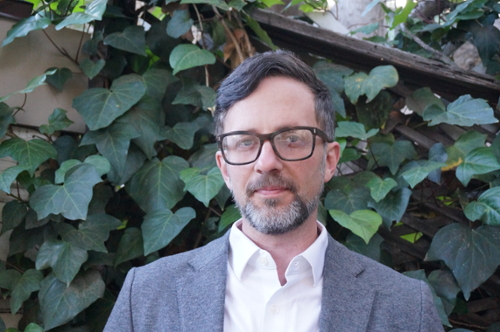
Artificial intelligence is changing what machines can do in scientific research. A recent study by Purdue sociologist David Peterson and collaborators suggests that, beyond what machines are able to do, science itself is being reorganized in ways that make scientific knowledge and practices more accessible to machines.
In their article, “Remaking the landscape of scientific expertise: The emergent research program of total automation in science,” published in Big Data & Society (2026 13:3), Peterson and coauthors Bernard Koch, Ramya Natarajan and Aaron Panofsky examine efforts to automate activities across the scientific process. Researchers are developing systems that can synthesize scientific literature, identify relationships among findings, generate hypotheses, conduct experiments and evaluate whether results can be reproduced. Although individual projects typically target particular problems, the authors argue that when considered together they constitute an “emergent research program” that aims at the full automation of science.
A key part of that process is what the researchers call “taskification.” Scientific expertise often involves complex combinations of knowledge, experience and judgment that are difficult to reproduce in a machine. Automation becomes more feasible when those activities are broken into narrower tasks with clearly defined goals and measurable outcomes. The study argues that making machines better at those tasks is only part of the process. Scientific information and practices are also becoming more standardized and machine-readable. Data repositories, standardized terminology, formal descriptions of methods and systems for organizing scientific concepts can reduce the ambiguity and contextual knowledge that machines have difficulty navigating. The authors describe these changes as a form of “pre-automation.”
“We have designed science around the sorts of narrative explanations and data simplifications that help humans make sense of incredible complexity,” Peterson explains. “Machines don’t necessarily need those sorts of heuristics.”
These developments also raise questions about the future of scientific expertise. Peterson and his colleagues identify three areas commonly associated with human scientists: insight, embodied knowledge and judgment. Insight includes recognizing patterns and identifying promising questions. Embodied knowledge encompasses practical skills learned through experience, including the physical work of conducting experiments. Judgment includes assessing whether findings are reliable or important. Automation projects are beginning to address parts of all three. What remains for humans varies from project to project. An activity treated as requiring human expertise in one system may itself become the target of automation in another, leaving no single category of scientific work that these projects consistently reserve for people.
The researchers trace this emerging approach to automation through 26 qualitative interviews, focusing on scientists and program managers involved in DARPA-supported efforts to automate aspects of scientific work. Their analysis does not assume that fully autonomous science will ultimately be achieved. Instead, they identify how individual projects are breaking scientific expertise into tasks that machines can perform, while broader changes in scientific practice and infrastructure are making research increasingly amenable to automation. Taken together, these developments point toward a larger trajectory of automation even when individual projects pursue narrower goals.
Cumulatively, automation efforts could change how scientists develop expertise, how graduate students and postdoctoral researchers are trained and how scientific findings are communicated and evaluated. Understanding AI’s future role in research requires attention to two developments at once: what machines are becoming capable of doing and how scientific institutions, practices and knowledge are changing around those capabilities.
Peterson, an associate professor of sociology at Purdue, studies how scientific communities produce and evaluate knowledge and expertise. His research spans the sociology of science and technology, metascience, artificial intelligence and the systems used to measure scientific work. In 2025, he was a SOCRATES Center for Advanced Study Fellow at Leibniz University Hannover, where he participated in interdisciplinary research on scientific credibility and trust. His 2025 book, The Unbuilt Bench: Experimental Psychology at the Verge of Science, published by Columbia University Press, was named a Behavioral Scientist Notable Book of 2025. The recent study is connected to research supported by the Alfred P. Sloan Foundation examining historical efforts to make progress in AI research visible and measurable.
The study was coauthored by Bernard Koch of the University of Chicago, Ramya Natarajan of Texas Christian University’s Burnett School of Medicine and Aaron Panofsky of UCLA’s Institute for Society and Genetics.