Purdue Fusion Studio Launches Structural Design Certificate for Live Entertainment
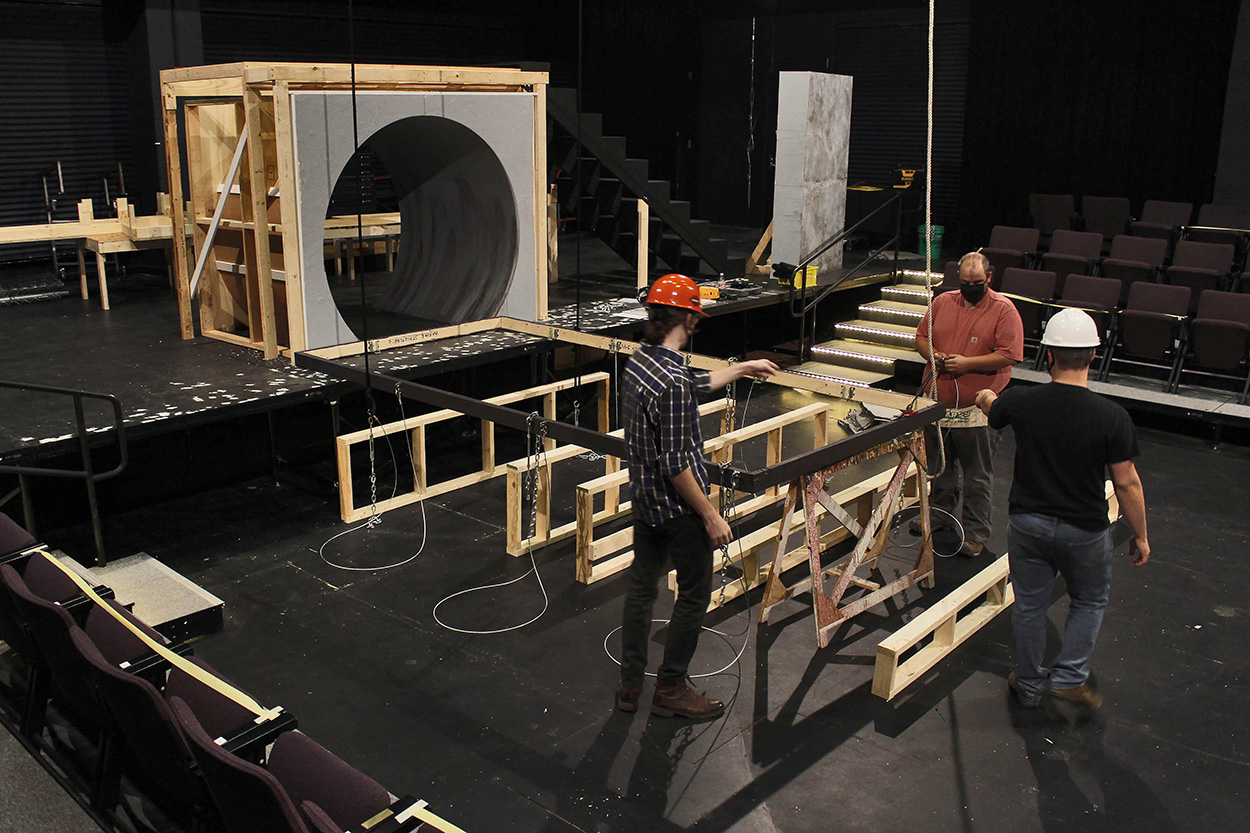
Creating ambitious physical environments for the stage requires more than artistic vision. Scenic structures must safely support performers, technicians, scenery and equipment.
A new online certificate from Purdue University’s Fusion Studio for Entertainment and Engineering is designed to help theatre artists, technical directors and entertainment professionals better understand the engineering principles behind those structures.
The Structural Design and Analysis in Live Entertainment Certificate is a five-course program that introduces learners to the fundamentals of structural analysis and their application to scenic design and construction. The program helps entertainment professionals make more informed decisions and collaborate more effectively with designers, directors, engineers and other stakeholders.
“Knowing structurally sound construction techniques, and understanding how they work, makes the difference between scenic elements that support the story—and the actors—and scenic elements that fall down and put everyone at risk,” said Rich Dionne, co-director of the Fusion Studio for Entertainment and Engineering and chair of Purdue’s Department of Theatre and Dance.
Building engineering knowledge for the stage
Through the five-course sequence, learners progressively build their knowledge, beginning with familiar scenic structures before exploring structural loads, geometric properties, material strength and, ultimately, the engineering design process.
The certificate includes five courses: Pre-Qualified Structures, Structural Load Analysis, Geometric Properties, Lumber Materials Analysis and Structural Design Capstone.
While the coursework requires a basic understanding of mathematical analysis, calculus and advanced mathematics are not required, making the program accessible to learners without an extensive math or engineering background.
The foundational Pre-Qualified Structures course introduces common structures used in theatrical set design and the engineering principles that help ensure their safety. Topics include load distribution on platforms and staging, framing and leg supports, pre-manufactured platforming techniques, and construction using sheet goods, stick lumber and stressed-skin panels.
The course can also be taken independently, providing an option for professionals interested in building foundational knowledge without completing the full certificate.
Applying engineering to real-world productions
The program culminates in the Structural Design Capstone, where learners apply their knowledge through three structural design projects.
Participants balance engineering considerations with the real-world needs of a production, including stakeholder goals, budgets, schedules and other project constraints.
While the certificate is not intended to replace the expertise of a qualified engineer when one is required, it is designed to help entertainment professionals better understand structural considerations, develop safer solutions for typical theatrical applications and recognize when a project requires professional engineering input.
Designed for working professionals
The certificate is online and open to anyone. Four of the five courses are asynchronous, allowing learners to progress through the material at their own pace, and learners have up to 18 months to complete the full certificate.
The capstone incorporates peer engagement, feedback and critique and is offered once per year.
The Structural Design and Analysis in Live Entertainment Certificate expands the Fusion Studio’s work at the intersection of entertainment and engineering education while making specialized professional development available to learners beyond Purdue’s campus.
About the Fusion Studio for Entertainment and Engineering
The Fusion Studio for Entertainment and Engineering at Purdue University brings together expertise from entertainment and engineering to advance education, research and collaboration across the disciplines.