
Online Communication Graduate Certificate Programs
Take your next step with an online communication graduate certificate Request More Information
Take your next step with an online communication graduate certificate
Purdue’s Department of Communication offers six fully online graduate certificates to help you advance your knowledge in a variety fields within communication in less time than a traditional master’s degree. These certificates teach in-demand skills in to advance your communication skills across all settings.
Credits from these graduate certificates can be transferred to the Master of Science in Communication program, allowing you to stack credentials in your persistent pursuit of becoming a successful communications professional or executive. Purdue’s Master of Science in Communication was ranked the No. 1 online master’s in communication program by mastersincommunication.org in 2024.
Stand out with a Purdue certificate in communication
Earning a graduate certificate in communication from Purdue will give you the skills needed to manage top-performing communication organizations.
Each certificate is composed of three or four fully online courses that can be completed in as little as two semesters. All credits transfer seamlessly into Purdue’s online communications master’s degrees.

Explore Offerings
Online Health Communication Graduate Certificate
Online Branding and Marketing Communication Graduate Certificate
This graduate certificate will equip you to develop communication strategies by integrating marketing, public relations and advertising. You will learn how to facilitate the creation of comprehensive communication plans and craft effective advertising, marketing and branding initiatives. Additionally, the courses will focus on developing messages that drive engagement by applying persuasion theory and best practices within the fields of branding and marketing. By the end, you’ll be prepared to design impactful campaigns that effectively resonate with and influence your target audience.
Online Digital Media and Communication Technology Graduate Certificate
This graduate certificate will teach you to articulate the role of digital and social media communication technologies in designing effective campaigns. You will learn how to use these technologies to implement communication strategies that align with organizational goals. By leveraging social media and digital communication data, you’ll be able to evaluate the impact of messaging strategies. Additionally, the course will explore emerging technologies such as artificial intelligence and generative language models, and their influence on the digital communication landscape.
Online Sports Communication Graduate Certificate
Online Strategic Communication Management Graduate Certificate
Graduates of the program become well-versed in a variety of different communication techniques and develop a thorough understanding of:
-Planning, executing and evaluating strategic communication plans
-Recognizing communication issues from a global perspective
-Measuring, evaluating and implementing communication campaigns
-Working with communication during times of crisis
Online Communication and Leadership Graduate Certificate
Successful leadership thrives with proper communication utilized within corporate contexts. The online Graduate Certificate in Communication and Leadership will help you develop a strong understanding of corporate communication methods as you learn to apply them in leadership roles within your field. Through courses focused on the application of communication and leadership across various industries and professional settings, the communication and leadership certificate delivers valuable skills such as leading cross-cultural teams, developing techniques for collaboration and effectively communicating with superiors and subordinates.
Guided by expert faculty members who bring their real-world professional experiences to their courses, the communication and leadership certificate program prepares students to succeed in a variety of leadership positions. Course topics include:
-Methods for identifying relevant theories and principles of organizational communication
-Utilization of communication to increase team productivity
-Development of comprehensive internal and external communications plans
-Communication strategies to communicate with executives when stakes are high
Online Professional Development Program Costs
| CURRENT TUITION RATES AND FEES* | IN-STATE | OUT-OF-STATE |
| Total Cost Per Credit Hour | $525 | $825 |
| Total Credit Hours | 9 | 9 |
| Total Program Cost | $4,680 | $7,180 |
- The cost of attending Purdue varies depending on where you choose to live, enrollment in a specific program or college, food and travel expenses, and other variables. The Office of the Bursar website shows estimated costs for the current aid year for students by semester and academic year. These amounts are used in determining a student’s estimated eligibility for financial aid. You can also use our tuition calculator to estimate tuition costs.

Courses
Online Health Communication Graduate Certificate
Required course:
- -COM 60111 Seminar in Strategic Communication
Choose two electives:
- -COM 57600 Health Communication
- -COM 64500 Healthcare Communication
- -COM 65500 Health Advocacy
Total: Nine credits
Online Branding and Marketing Communication Graduate Certificate
Required course:
- -COM 60111 Seminar in Strategic Communication
Choose two electives:
- -COM 64100 Integrated Marketing Communication
- -COM 64400 Strategic Personal Branding
- -COM 64600 Strategic Corporate Branding
Total: Nine credits
Online Digital Media and Communication Technology Graduate Certificate
- -COM 60111 Seminar in Strategic Communication
- -COM 62111 Seminar in Strategic Communication and Social Media
- -COM 62300 Artificial Intelligence and Social Media
Total: Nine credits
Online Sports Communication Graduate Certificate
- -COM 60111 Seminar in Strategic Communication
- -COM 66100 Sports Communication
- -COM 66200 Strategic Sports Media Relations
Total: Nine credits
Online Strategic Communication Management Graduate Certificate
Required course:
- -COM 60111 Seminar in Strategic Communication
Choose two electives:
- -COM 60911 Strategic Public Relations
- -COM 60311 Crisis Communication
- -COM 62111 Seminar in Strategic Communication and Social Media
- -COM 65000 Communication and leadership
Total: Nine credits
Online Communication and Leadership Graduate Certificate
Require Courses:
- -COM 60111 Seminar in Strategic Communication
- -COM 65000 Communication and leadership
Choose two electives:
- -COM 65100 Organizational Culture and Internal Communication
- -COM 65200 Communication Training and Education
- -COM 64400 Personal Branding
- -ENGT 50700 Fundamentals of Collaborative Leadership and Agile Strategy
Total: 12 credits
Course Descriptions
Graduate Certificate in Strategic Communication Management
Required Course:
SEMINAR IN STRATEGIC COMMUNICATION (COM 60111)
This course surveys the theories and processes of strategic communication and its practice by business, government, politicians and nonprofits — in domestic and international arenas. It also emphasizes the application of theory to provide an in-depth understanding of planning, executing and evaluating strategic communication plans.
Elective Courses (choose two):
STRATEGIC PUBLIC RELATIONS (COM 60911)
Strategic communication is composed of integrated marketing communications (IMC), advertising and public relations. As such, it builds on the general strategic communications course by providing an in-depth understanding of public relations. Specifically, the class will cover public relations theories, ethics, concepts, principles and applications.
SEMINAR IN CRISIS COMMUNICATION (COM 60311)
This course focuses on how to communicate in a time of crisis in order to manage threats to organizational identity, reputation or financial security.
STRATEGIC COMMUNICATION AND SOCIAL MEDIA (COM 62111)
This course provides an overview of social media and its relationship to strategic communication. Students will learn about the available forms of social media (e.g., blogs, social networks and wikis) and how they can help build and manage relationships with stakeholders. Students also analyze social media metrics as a framework for evaluating the effectiveness of social media strategies as tools for developing corporate, nonprofit and governmental images and brands.
COMMUNICATION AND LEADERSHIP (COM 65000)
Communication is the essence of leadership, and this course aims to identify how communication can fuel productivity, drive consensus and push the organization to a leadership position within a market.
Graduate Certificate in Branding and Marketing Communication
Required Courses:
SEMINAR IN STRATEGIC COMMUNICATION (COM 60111)
This course surveys the theories and processes of strategic communication and its practice by business, government, politicians and nonprofits — in domestic and international arenas. It also emphasizes the application of theory to provide an in-depth understanding of planning, executing and evaluating strategic communication plans.
INTRODUCTION TO INTEGRATED MARKETING COMMUNICATION (COM 64100)
Developing cohesive and integrated external and internal communication initiatives across traditional and social media channels is becoming increasingly important for strategic communication professionals. Traditionally, public relations, marketing and advertising/promotion have had separate functions; increasingly, the role of strategic communication practitioners is to ensure the consistency of the brand story and message across all channels of communication.
STRATEGIC PERSONAL BRANDING (COM 64400)
This graduate course will examine the theories and processes of personal brand development and self-marketing. An emphasis will be placed on experiential learning, self-awareness, image and perceptual management, career development, self-promotion, brainstorming and effective communication.
STRATEGIC CORPORATE BRANDING (COM 64600)
This graduate course will survey the theories and processes of business brand design, development and implementation. The course will examine best practices, trends and creative strategies used in contemporary business branding. An emphasis will be placed on experiential learning, case study analysis and the application of relevant theory to provide an in-depth understanding of the development, planning, execution and evaluation of business brands.
Graduate Certificate in Sports Communication
Required Courses:
SEMINAR IN STRATEGIC COMMUNICATION (COM 60111)
This course surveys the theories and processes of strategic communication and its practice by business, government, politicians and nonprofits — in domestic and international arenas. It also emphasizes the application of theory to provide an in-depth understanding of planning, executing and evaluating strategic communication plans.
SPORTS COMMUNICATION (COM 66111)
Sports Communication provides students a strategic and holistic sports communication approach and framework to solve communications challenges. The course focuses on understanding the ever-increasingly competitive athletic landscape — collegiate and professional (though the lines are blurring) — to aid the sports communicator in crafting a strategic communication plan based on quantifiable objectives and desired outcomes. Special topics include crisis and reputation management, leveraging social media, the emergence of AI, and athletes and culture.
STRATEGIC SPORTS MEDIA RELATIONS (COM 66211)
Strategic Sports Media Relations explores how to navigate a media landscape that is evolving at light-speed both in collegiate and professional sports. This course offers students the tools to engage productively with media members and places particular emphasis on the communicator/media relationship, how media prefer to receive content and the role of the communications leader. Strategic Sports Media Relations also delves into media interaction during crisis events and the rise of AI.
Graduate Certificate in Communication and Leadership
Required Courses:
SEMINAR IN STRATEGIC COMMUNICATION (COM 60111)
This course surveys the theories and processes of strategic communication and its practice by business, government, politicians and nonprofits — in domestic and international arenas. It also emphasizes the application of theory to provide an in-depth understanding of planning, executing and evaluating strategic communication plans.
COMMUNICATION AND LEADERSHIP (COM 65000)
Communication is the essence of leadership, and this course aims to identify how communication can fuel productivity, drive consensus and push the organization to a leadership position within a market.
Elective Courses (choose two):
ORGANIZATIONAL CULTURE AND INTERNAL COMMUNICATION (COM 65100)
The modern workplace had transformed well before a global pandemic magnified the paradigm shift already under way. In the United States, both consumers and the first five-generation workforce began to demand more from brand statements and value propositions. Those demands include genuine commitment to inclusion and diversity internally and corporate social responsibility externally. This course highlights the vital role professional communicators have in conveying brand and value statements that emanate from the organization’s cultural core and carry forward to the consumer universe.
COMMUNICATION EDUCATION AND TRAINING (COM 65200)
This course is designed to introduce fundamental concepts related to learning theory and learning design as applied to training and educational settings. The course will examine best practices and strategies with a focus on assessing and enhancing communication-related skills.
STRATEGIC PERSONAL BRANDING (COM 64400)
This graduate course will examine the theories and processes of personal brand development and self-marketing. An emphasis will be placed on experiential learning, self-awareness, image and perceptual management, career development, self-promotion, brainstorming and effective communication.
FUNDAMENTALS OF COLLABORATIVE LEADERSHIP AND AGILE STRATEGY FOR ENGINEERING TECHNOLOGY (ENGT 50700)
This course will provide students with a foundation in collaborative leadership and agile strategy. The course brings together theories and insights from a variety of disciplines including engineering, management, psychology and social science. Increasingly, manufacturing managers are being called upon to apply their technical skills in collaborative environments that cut across organizational units and inter-organizational boundaries. Understanding how to design and guide collaborations and apply agile approaches for meeting strategic objectives is an important skill set and knowledge base in the 21st-century economy, defined more by open networks than the ridged hierarchies of the past.
Shared Course Opportunities (Possible elective courses. See your academic advisor to confirm availability.)
PUBLIC HEALTH ADMINISTRATION (PUBH 60400)
An introduction to the principles of management as applied to public health organizations, particularly local health departments. Topics include the organization of the U.S. public health system, legal and ethical obligations of public health administrators, the public health workforce and human resource issues, public health budgeting and finance, and leadership in the public health agency. The course is designed to introduce master’s level students in public health to the management skills necessary to successfully implement a public health program.
THEORETICAL FOUNDATIONS OF HEALTH BEHAVIOR (PUBH 60200)
Coursework examines the theoretical foundations of health behavior. Students explore the development of a conceptual framework for understanding and facilitating behavior enhancement, elimination and/or maintenance in health promotion and education. Topics include current theories regarding health-related behaviors.
DESIGN AND ANALYSIS OF PUBLIC HEALTH INTERVENTIONS (PUBH 60600)
Professional competencies in design, implementation, evaluation and diffusion of health interventions in community settings. Program planning paradigms, determinants of health behavior and behavior change strategies serve as a basis for analyzing health interventions.
FUNDAMENTALS OF EPIDEMIOLOGY (PUBH 53500)
This course is an introduction to epidemiology, which is the study of the patterns, causes and impact of disease in populations. Epidemiology is increasingly important for public health and clinical medicine research and policy. This course will discuss the basic principles and methods of epidemiology, including measurements of disease occurrence and association, study designs and determination of causality. Contemporary examples will be used to illustrate the application of these concepts, with an emphasis on environmental causes of disease.
Graduate Certificate in Health Communication
Required Courses:
HEALTHCARE COMMUNICATION (COM 64500)
The healthcare environment is increasingly complex and poses many challenges for communication professionals seeking to improve communication with key health industry stakeholders, including patients, providers, payers, government agencies and others.
SEMINAR IN STRATEGIC COMMUNICATION (COM 60111)
This course surveys the theories and processes of strategic communication and its practice by business, government, politicians and nonprofits — in domestic and international arenas. It also emphasizes the application of theory to provide an in-depth understanding of planning, executing and evaluating strategic communication plans.
HEALTH ADVOCACY (COM 65500)
This course considers how federal, state and local policy influence health status and health improvement. Through this course, students gain an understanding of the role of health communication campaigns in health advocacy efforts. To engage their understanding, students will apply an advocacy campaign model to address a relevant health issue.
Graduate Certificate in Digital Media and Communication Technology
Degree Required Courses:
SEMINAR IN STRATEGIC COMMUNICATION
This course surveys the theories and processes of strategic communication and its practice by business, government, politicians and nonprofits — in domestic and international arenas. It also emphasizes the application of theory to provide an in-depth understanding of planning, executing and evaluating strategic communication plans.
STRATEGIC COMMUNICATION AND SOCIAL MEDIA (COM 62111)
This course provides an overview of social media and its relationship to strategic communication. Students will learn about the available forms of social media (e.g., Blogs, Social Networks and Wikis) and how they can help build and manage relationships with stakeholders. Students also analyze social media metrics as a framework for evaluating the effectiveness of social media strategies as tools for developing corporate, nonprofit and governmental images and brands.
Artificial Intelligence and Social Media (COM 62300)
This course provides an overview of the use of artificial intelligence and machine learning technologies in contemporary social media campaign development and management. Students will learn about the technologies, AI tools, theories, issues, challenges, ethical considerations and best practices that inform the planning and implementation of successful social media communication and audience engagement. Throughout the course, students may engage in experiential learning, case studies, and group projects to apply their knowledge and gain hands-on experience in using AI for social media management.
Faculty
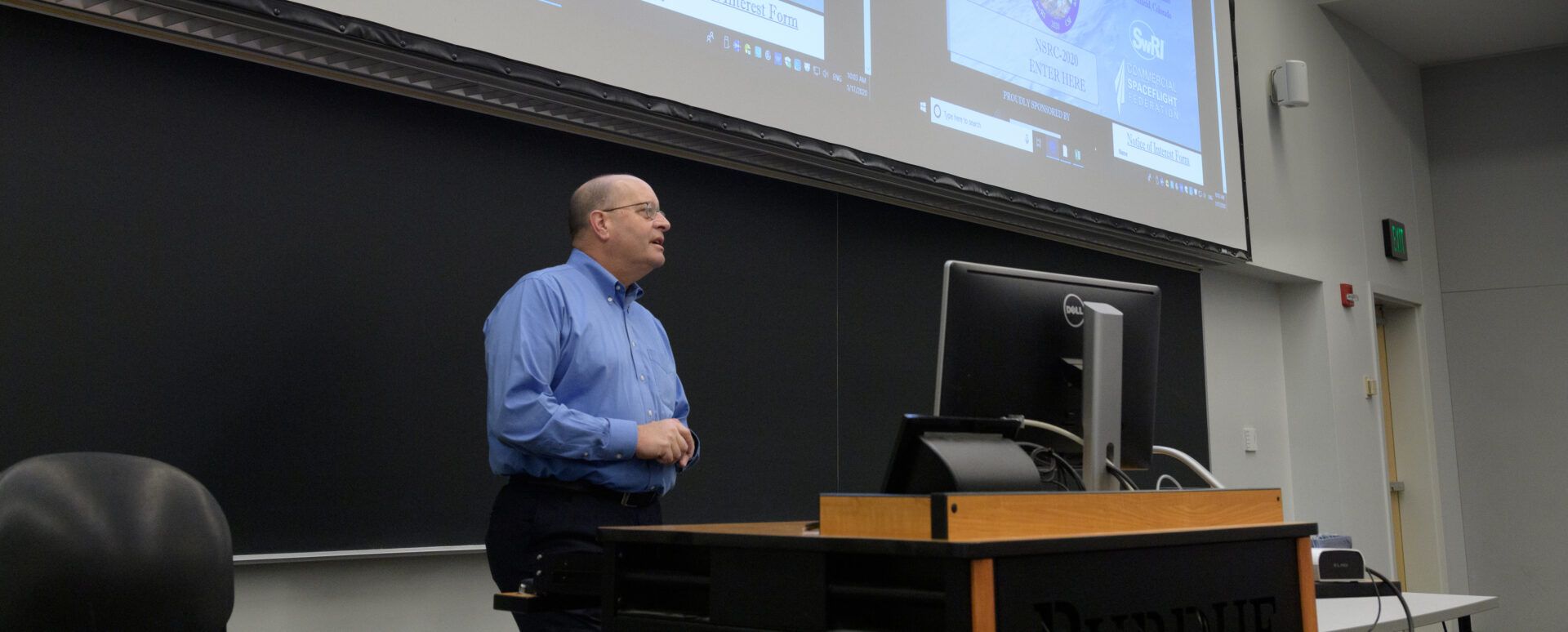
Our esteemed faculty members are committed to delivering a transformative educational experience combining theoretical knowledge with practical application. They foster an inclusive and collaborative online learning environment, nurturing the talents and aspirations of our students. With their guidance, our Master of Science in Communication program equips graduates with the skills and confidence to excel in various communication roles across industries.
FAQs
Questions and answers
Please find answers to the most popular questions about Purdue’s online communication graduate certificates asked by many of our new online students.
DO I NEED A BACKGROUND IN COMMUNICATION TO QUALIFY FOR ADMISSION?
No, communication has a wide variety of applications. Our students come from all different educational and professional backgrounds. We do require students to hold a bachelor’s degree in order to be considered for admission.
IS FINANCIAL AID AVAILABLE?
While a Purdue graduate student in a non-degree seeking program is not eligible for federal student aid there are other funding options that may be available to you.
Financial assistance may be available from alternative loan programs. There are a large number of private commercial education loan options available to assist students in meeting college costs. You can obtain more information about alternative loans at https://www.purdue.edu/dfa/apply/loans/ . For specific tuition rates, click here.
CAN I ENROLL IN THE ONLINE MS IN COMMUNICATION OR MS IN CORPORATE TRAINING AND COMMUNICATION PROGRAM UPON COMPLETION OF THE GRADUATE CERTIFICATE PROGRAM?
Yes, individuals who complete the certificate program can apply to these programs. If accepted they can apply the credits earned from the certificate to the master’s. The student will have to complete an application and pay an additional application fee.
HOW DO ONLINE CLASSES WORK?
Coursework is asynchronous, meaning that there are not specific times you need to be online. When you start the program, you will be given access to a virtual classroom interface. Your instructor will post coursework, syllabi, assignments, and messages every week. You will also use discussion boards, e-mail, and chat to communicate with your classmates and your instructor. You can log on and do your coursework at any time that is convenient for you, but you must turn in your assignments by the deadlines your instructor sets.
HOW MUCH TIME SHOULD I ALLOW FOR DOING HOMEWORK AND COMPLETING ASSIGNMENTS?
As in an on-campus program, you should plan on devoting about 15 to 20 hours a week to coursework, depending on your study habits.
WHAT IF I HAVE A QUESTION ABOUT HOMEWORK OR NEED HELP WITH A TECHNICAL ISSUE?
The faculty and staff at Purdue are dedicated to your success at the university and in the future. Your instructor will set weekly times for one-on-one electronic consultations and will answer emails in a timely fashion. Technical support is available for system and software issues. Our dedicated team is available to talk to you about financial aid, scheduling, or any other administrative issues.
WHAT WILL MY TRANSCRIPT SAY?
Post Baccalaureate Certificate in [name of certificate].
Important Admissions Dates
| Semester | Priority Application Deadlines* | Start of Classes |
| Summer 2026 | April 1, 2026 | May 11, 2026 |
| Fall 2026 | July 1, 2026 | August 24, 2026 |
| Spring 2027 | December 1, 2026 | January 11, 2027 |
Request More Information
Please fill out the following form to request more information.
Contact Information
Email: POApply@purdue.edu
Phone: 765-496-5646